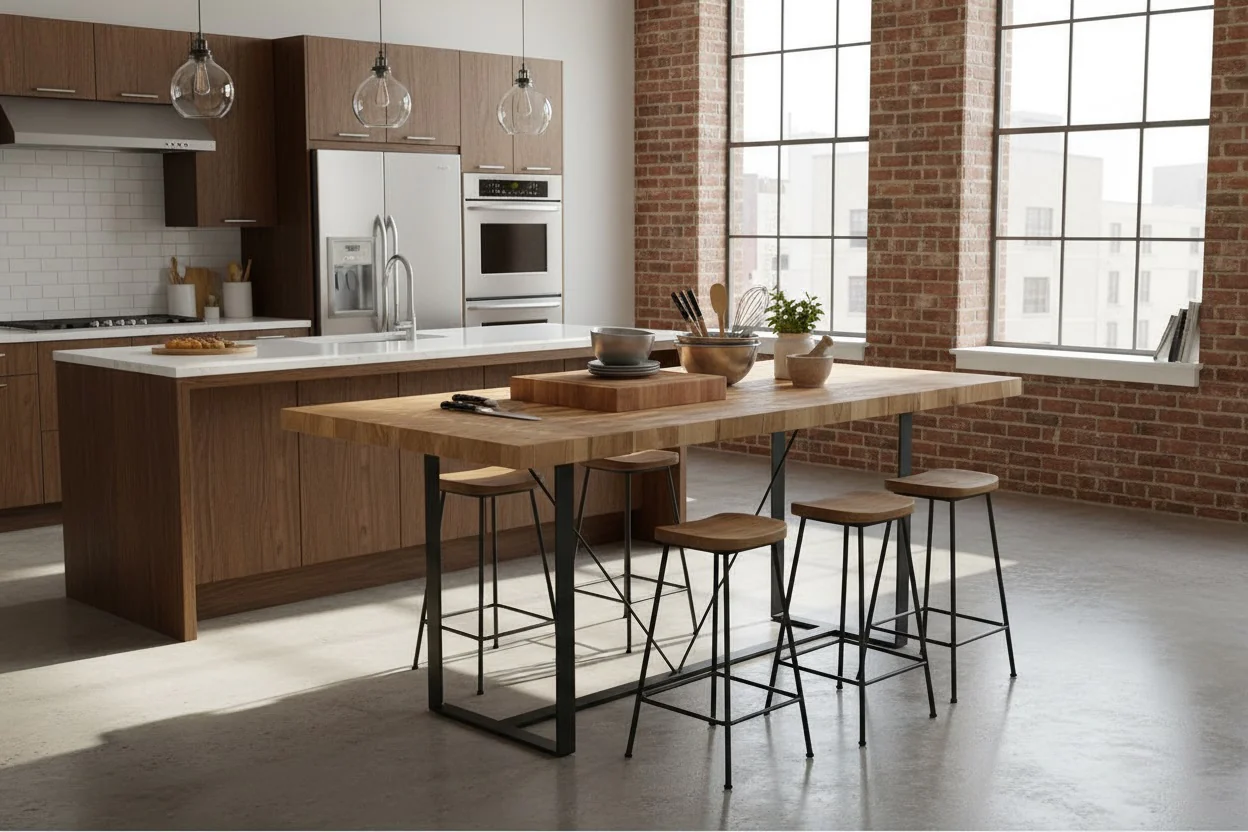
The Ashley Counter-Height Chopping Block Kitchen Table
11 years ago, before the workshop existed, before naming conventions were established, a hip lady named Ashley who needed a table walked into a backyard operation and placed an order. She had no reason to trust two woodworkers with sawdust in their hair and grand ideas, but she did anyway. Our first original design honors that bet.
Now we've placed a burly 2.5"-thick chopping block on top, arranging hundreds of end-grain blocks in a grid, each one sliced to reveal the swirling fingerprint of growth rings beneath. This construction method allows you to chop directly on the tabletop, so when a knife blade cuts down it slides between the fibers instead of cutting across them. The fibers close back up, which helps the board "heal" itself, reducing visible knife marks and placing less wear on your knife's edge.
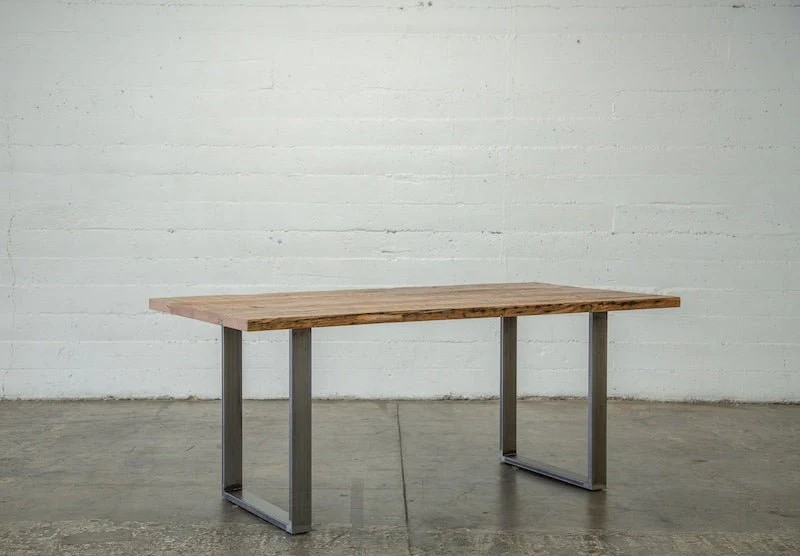
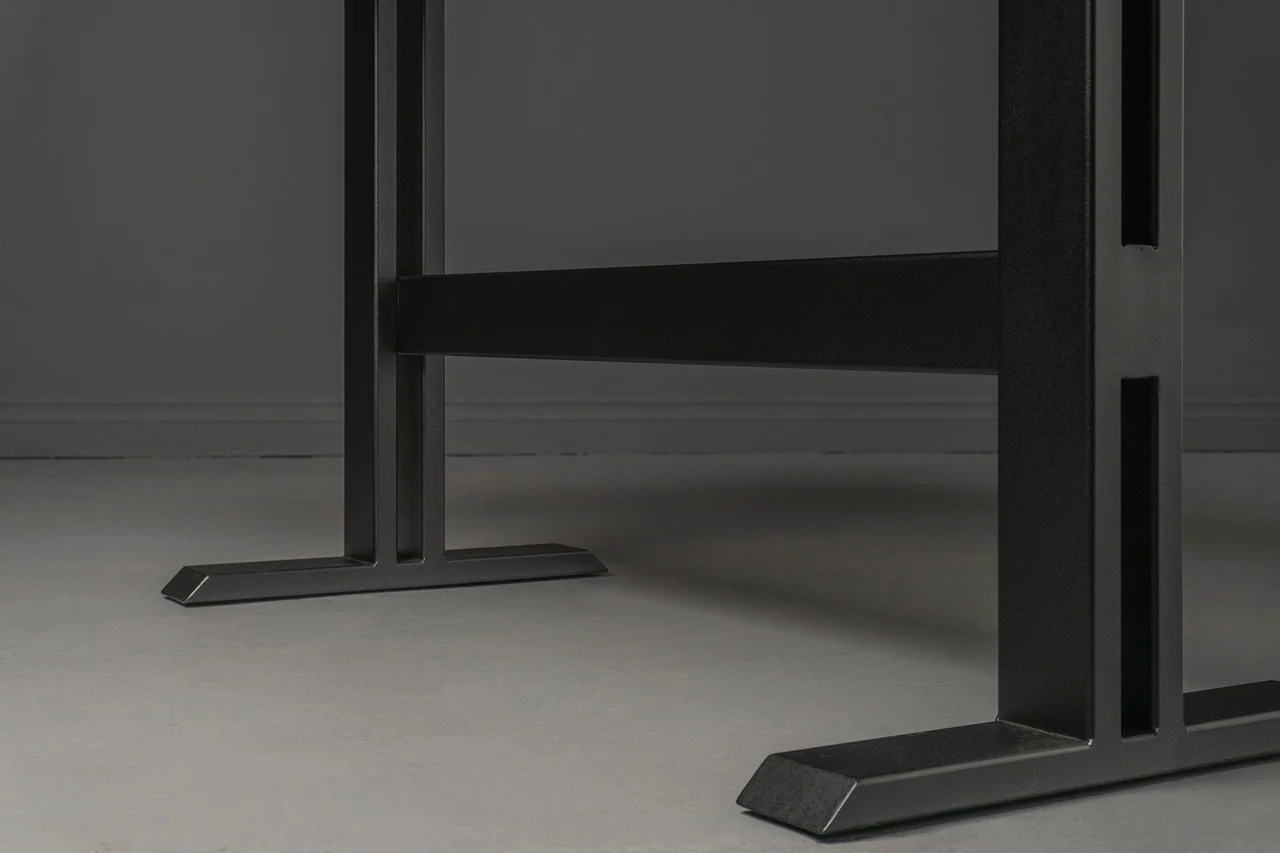
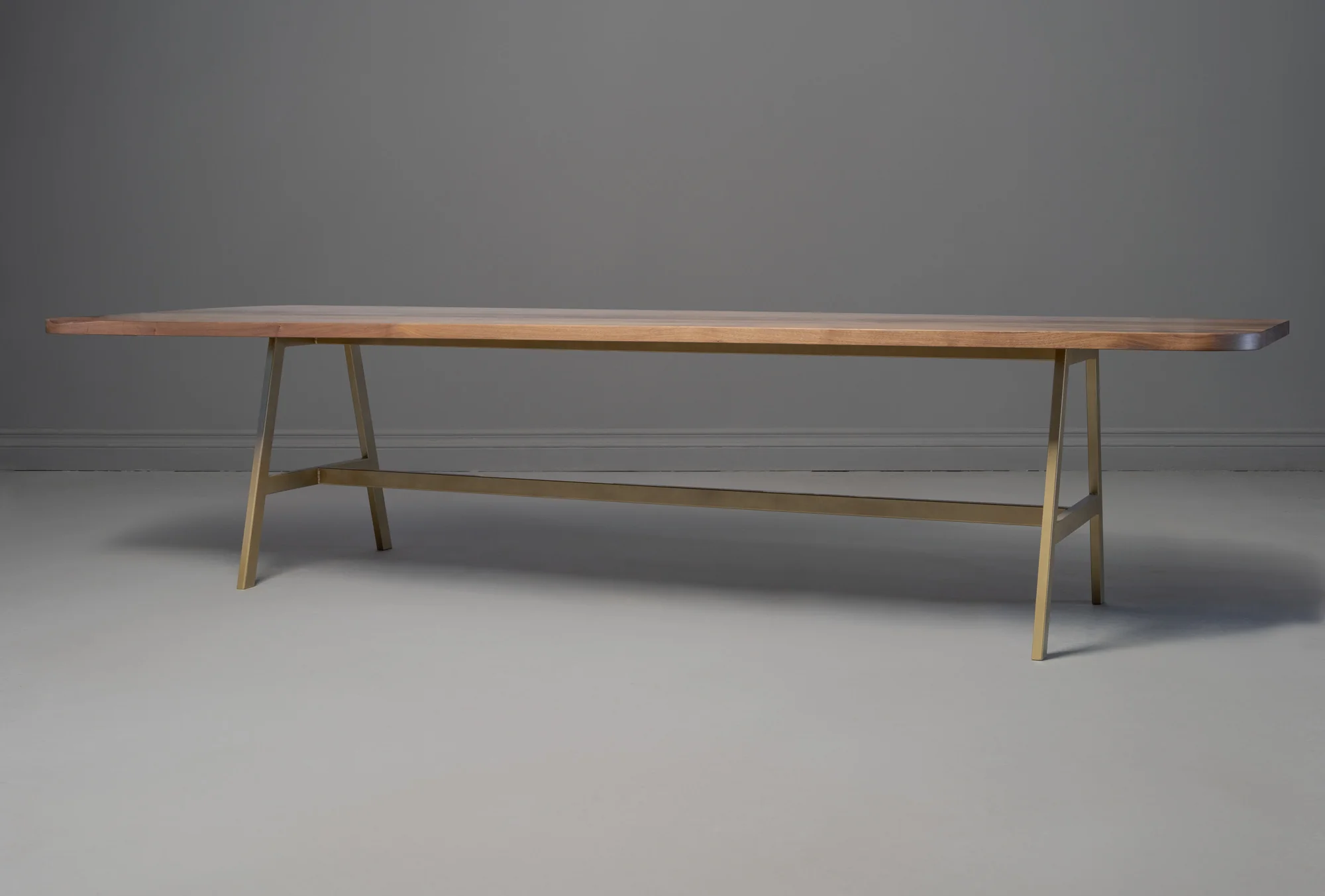
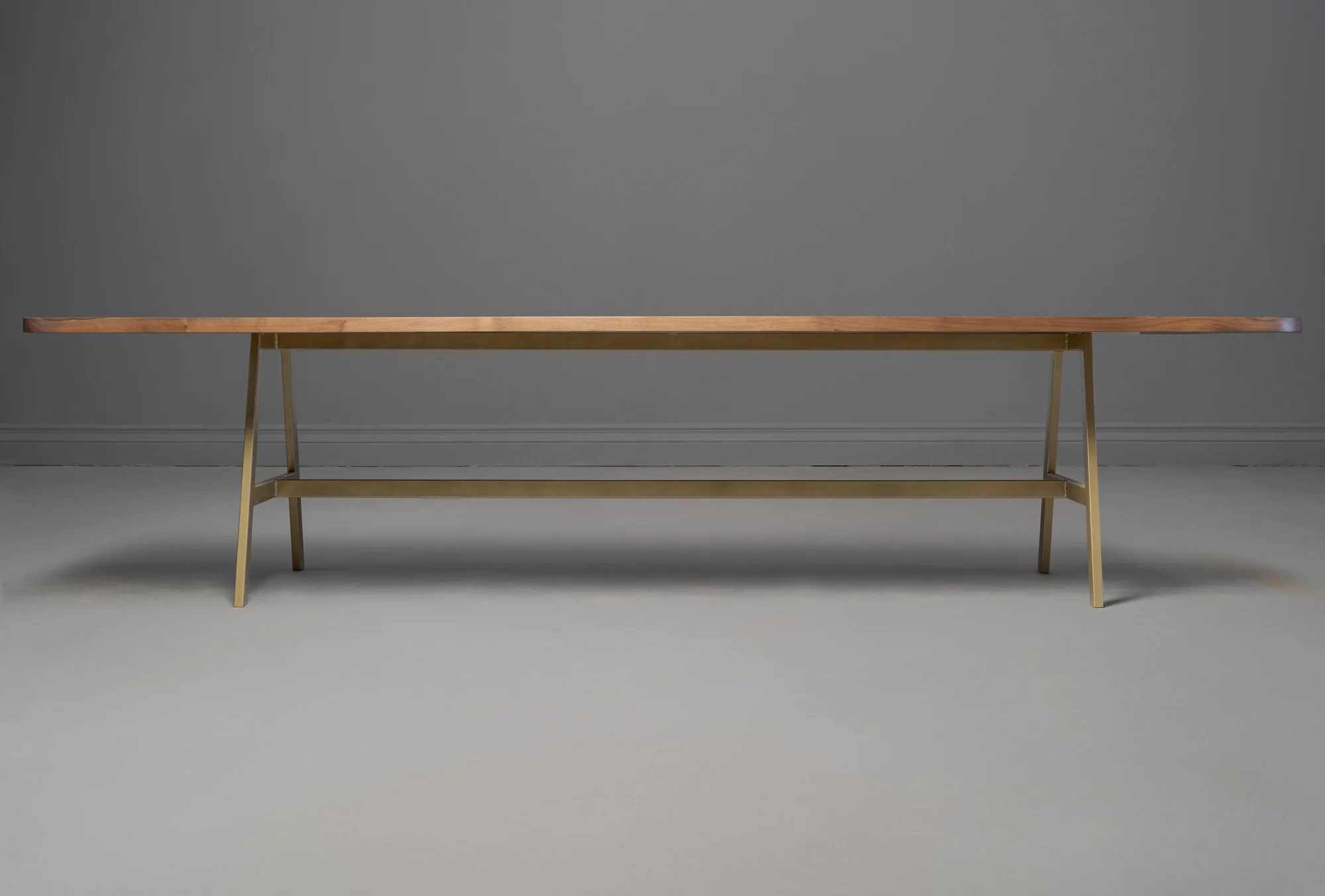
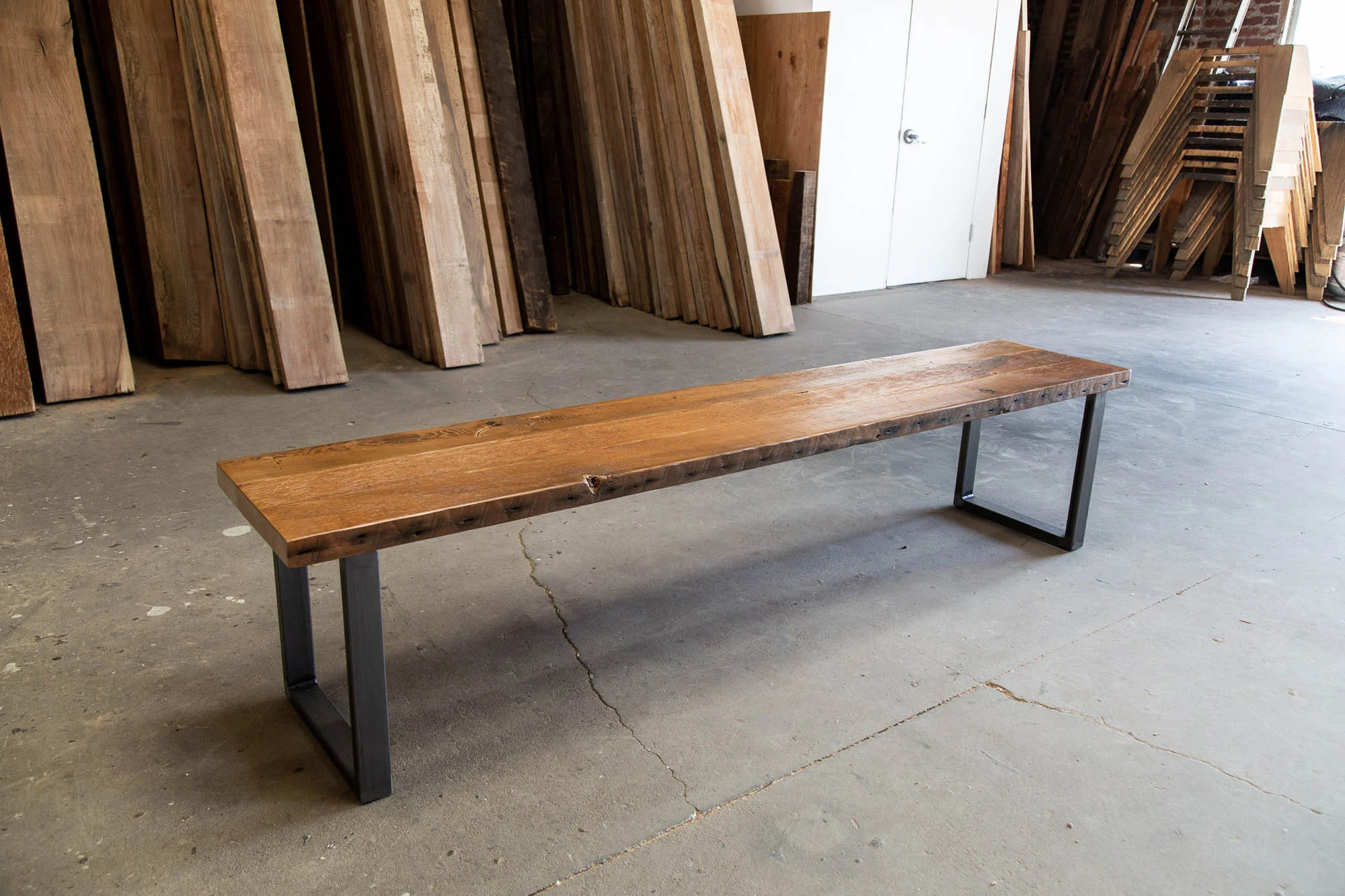
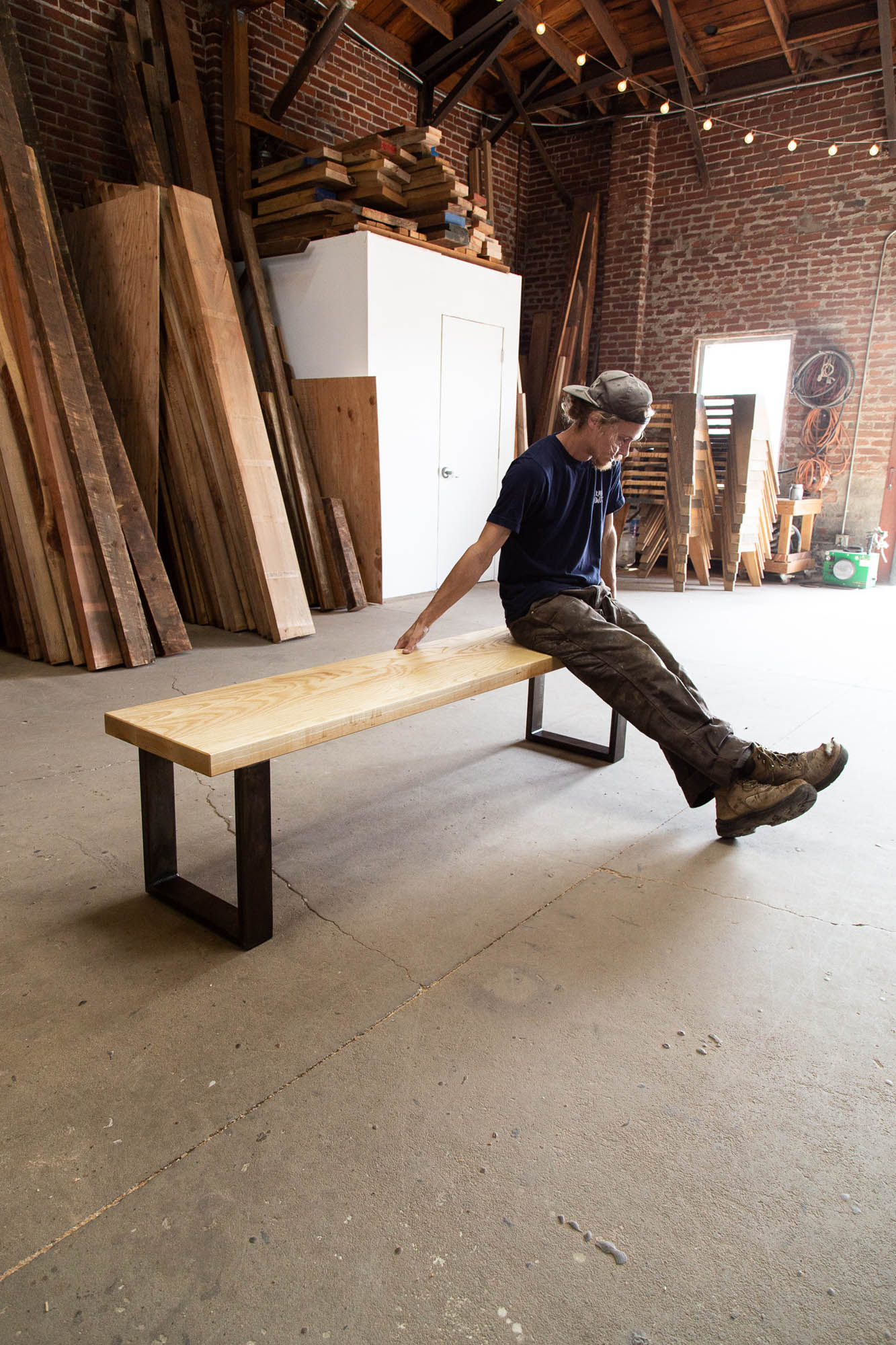
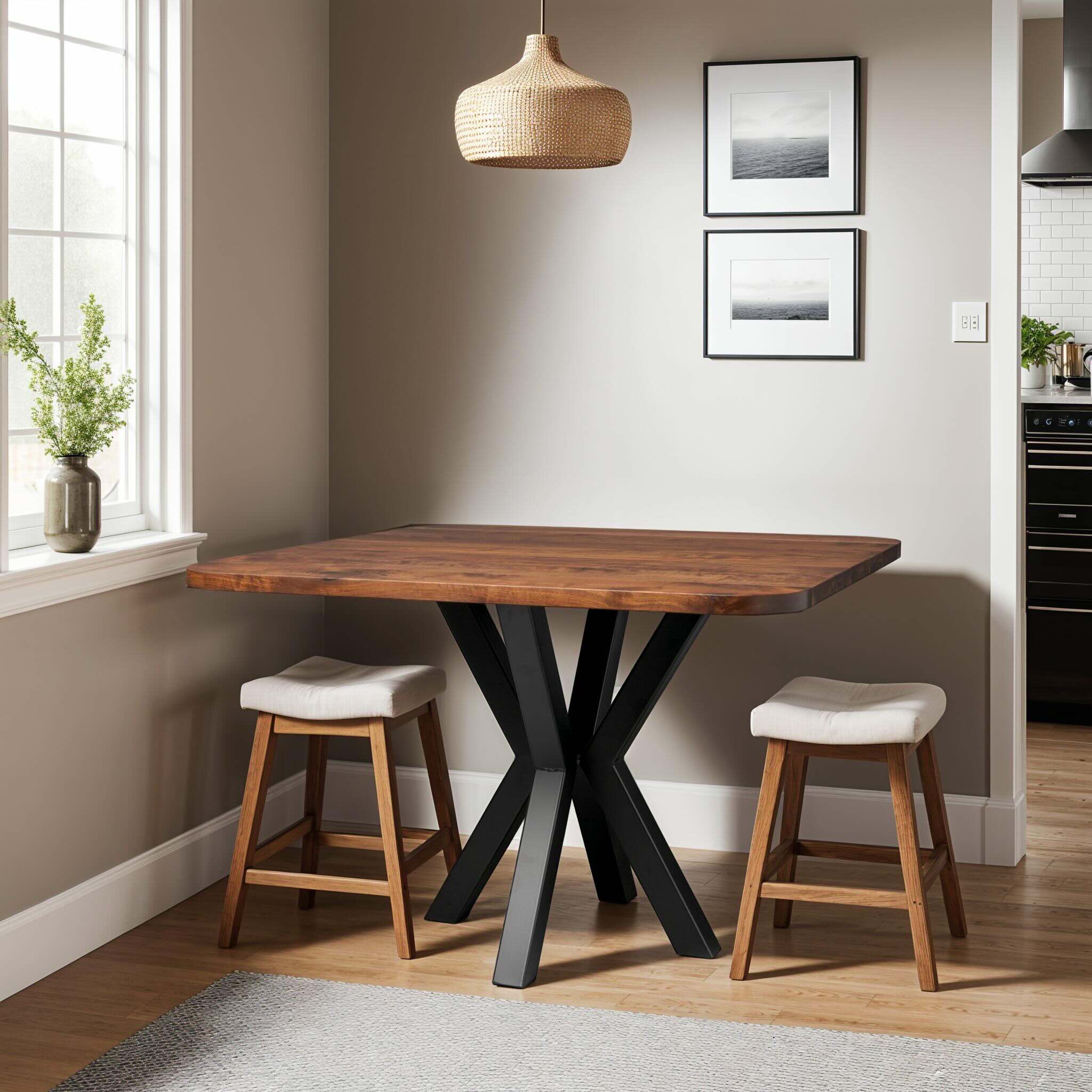
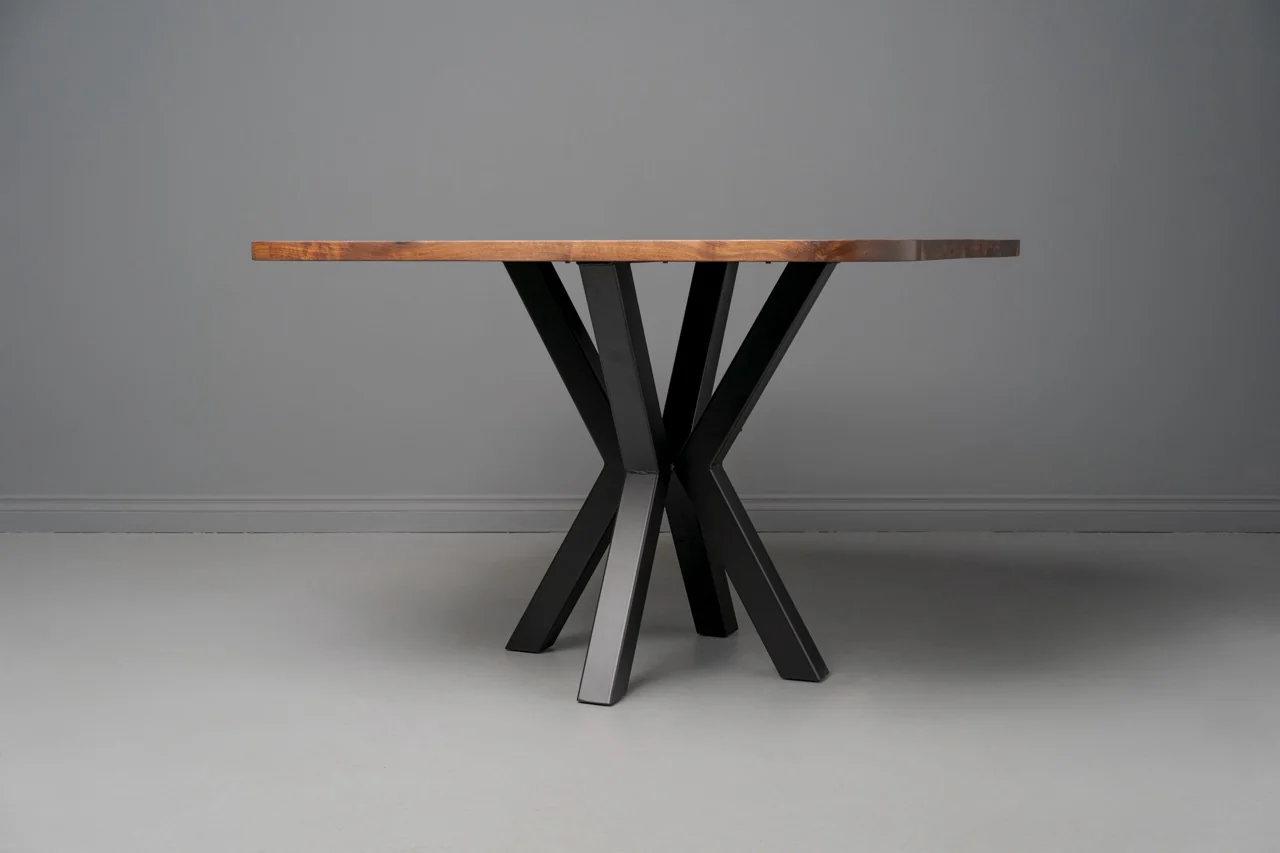
Beneath, the matte black steel framework draws from bridge engineering and Bauhaus economy. Open rectangular supports with diagonal tension rods create rigidity through geometry rather than bulk. The whole structure looks almost too light to hold that much wood, which is precisely the point. Engineering should feel effortless even when it isn't.
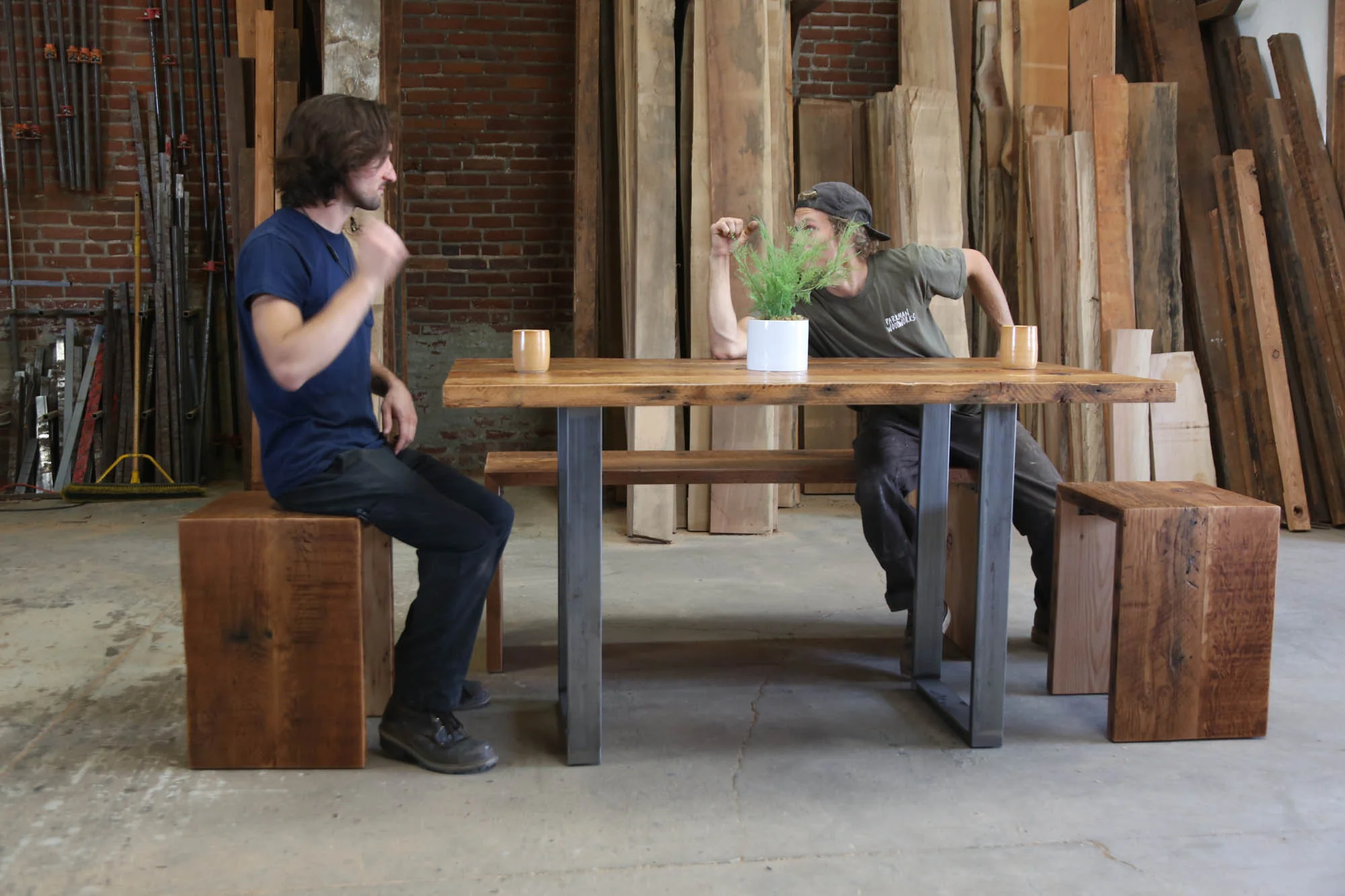
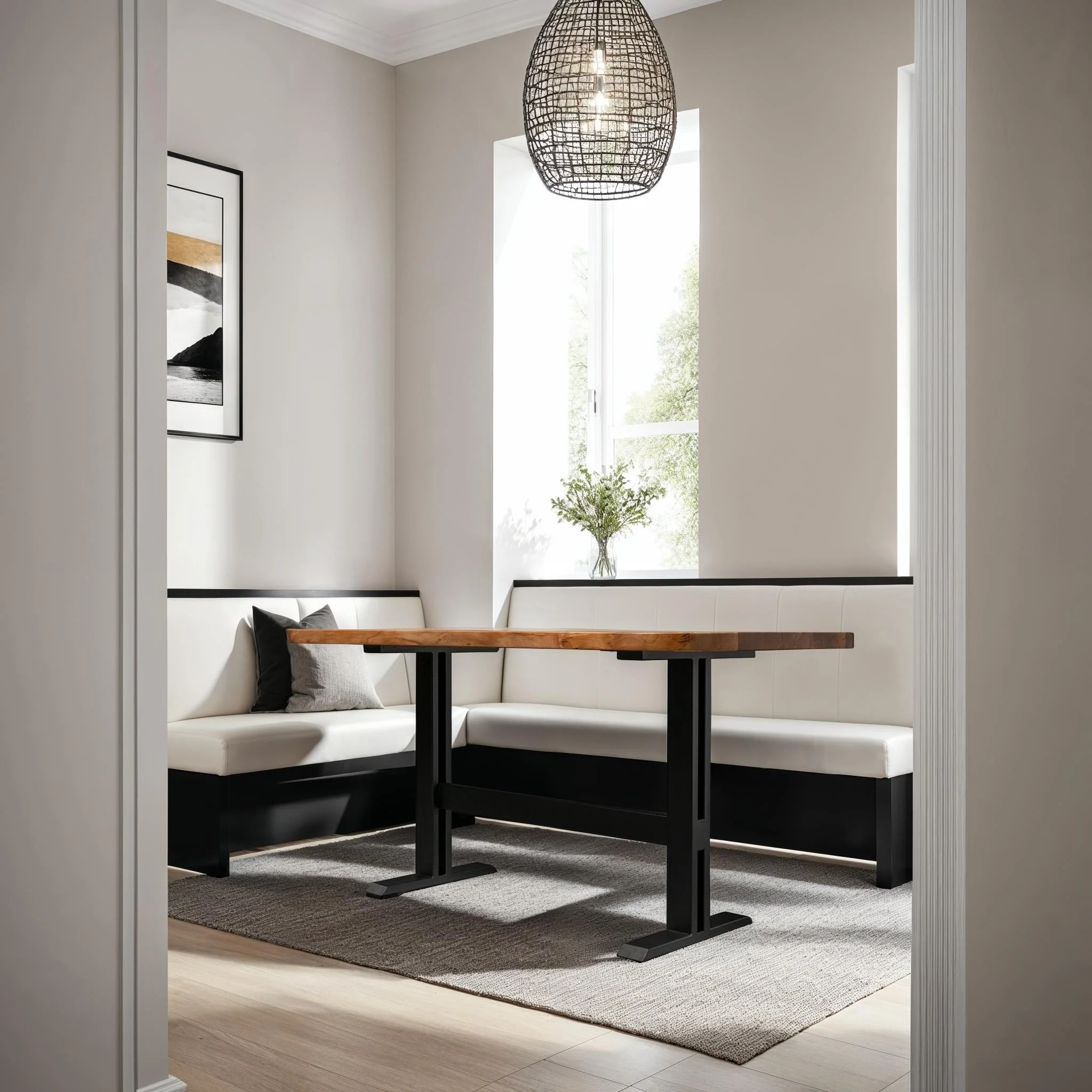
Counter height positions this piece naturally as a working surface, a gathering island where drinks get poured while someone preps dinner, or a casual dining spot that encourages leaning in rather than formal sitting. The open base design welcomes stools without the usual knee-knocking of traditional butcher block islands.
Each top begins with solid hardwood, much of which is salvaged from naturally fallen trees around Los Angeles. We mill and arrange the blocks by hand in our workshop, selecting pieces for complementary grain patterns that flow into compositions unique to every build. The striped edge profile reveals the construction method honestly, showing exactly how those blocks stack to create the mosaic above.
Original: $4,895.00
-70%$4,895.00
$1,468.50Product Information
Product Information
Shipping & Returns
Shipping & Returns
Description
11 years ago, before the workshop existed, before naming conventions were established, a hip lady named Ashley who needed a table walked into a backyard operation and placed an order. She had no reason to trust two woodworkers with sawdust in their hair and grand ideas, but she did anyway. Our first original design honors that bet.
Now we've placed a burly 2.5"-thick chopping block on top, arranging hundreds of end-grain blocks in a grid, each one sliced to reveal the swirling fingerprint of growth rings beneath. This construction method allows you to chop directly on the tabletop, so when a knife blade cuts down it slides between the fibers instead of cutting across them. The fibers close back up, which helps the board "heal" itself, reducing visible knife marks and placing less wear on your knife's edge.
Beneath, the matte black steel framework draws from bridge engineering and Bauhaus economy. Open rectangular supports with diagonal tension rods create rigidity through geometry rather than bulk. The whole structure looks almost too light to hold that much wood, which is precisely the point. Engineering should feel effortless even when it isn't.
Counter height positions this piece naturally as a working surface, a gathering island where drinks get poured while someone preps dinner, or a casual dining spot that encourages leaning in rather than formal sitting. The open base design welcomes stools without the usual knee-knocking of traditional butcher block islands.
Each top begins with solid hardwood, much of which is salvaged from naturally fallen trees around Los Angeles. We mill and arrange the blocks by hand in our workshop, selecting pieces for complementary grain patterns that flow into compositions unique to every build. The striped edge profile reveals the construction method honestly, showing exactly how those blocks stack to create the mosaic above.